


TL;DR:
- Effective supplement stacking requires clear goals, evidence-based choices, and regular assessment.
- Core supplements like creatine, whey protein, beta-alanine, and caffeine are supported by extensive research.
- Safety depends on choosing tested products, avoiding banned substances, and prioritizing proper nutrition.
Navigating the supplement market is genuinely overwhelming. Hundreds of products promise dramatic results, yet most athletes in the UK and Ireland end up spending money on combinations that cancel each other out or simply do nothing. The real issue is not a lack of options but a lack of strategy. Effective supplement stacking, which means combining two or more supplements to amplify their individual effects, requires clear goals, solid evidence, and honest self-assessment. This guide walks you through the science-backed criteria for building a stack, the supplements that actually earn their place, region-specific safety advice, and the most common mistakes that quietly sabotage progress.
Table of Contents
- Set clear goals before stacking
- The core evidence-based supplements to stack
- Safe supplement stacking: UK and Ireland essentials
- Supplement stacking strategies for different fitness goals
- Common mistakes and how to optimise your stack
- The uncomfortable truth about supplement stacking nobody tells you
- Build your best supplement stack with Elevate Supplements
- Frequently asked questions
Key Takeaways
| Point | Details |
|---|---|
| Define your goal | Start by targeting 3-5 supplements that match your top training objective. |
| Use proven options | Creatine, whey protein, beta-alanine and caffeine are trusted, evidence-based stack additions. |
| Prioritise supplement safety | Choose Informed Sport certified brands and always consult a professional. |
| Adjust with experience | Cycle your stack for 4-6 weeks, track changes, and adapt only one thing at a time. |
| Supplements support, not replace | Stacks are most effective with good nutrition, not as substitutes for real food. |
Set clear goals before stacking
Before you buy a single tub, you need to know exactly what you are training for. That sounds obvious, but most athletes skip this step and end up with a shelf full of half-used products. Strength, endurance, fat loss, and recovery each demand a different approach. Stacking for all four simultaneously is a recipe for confusion and wasted money.
Start by identifying your single most important training goal for the next four to six weeks. Once that is locked in, you can build around it. As evidence-based stack advice confirms, you should prioritise 3-5 supplements aligned directly to that goal rather than chasing a broader list.
Here is a simple process to follow:
- Write down your primary goal (for example, increase squat one-rep max by 10kg).
- Research which supplements have the strongest evidence for that specific outcome.
- Select three to five products maximum and document exact doses and timings.
- Run the stack for four to six weeks without changing anything else.
- Review your training log and note any measurable changes or side effects.
- Adjust only after a full assessment cycle.
For ideas on how peak performance and recovery stacking works in practice, it helps to see how experienced athletes structure their programmes. You can also find detailed stacking tips for athletes that break down timing and sequencing for different training blocks.
Avoid combining supplements with overlapping mechanisms unless you have a specific reason. For example, stacking two stimulants rarely doubles the benefit but often doubles the side effects.
Pro Tip: Create a simple tracking sheet, either digital or on paper, logging your performance metrics, energy levels, sleep quality, and any adverse reactions every week. This turns guesswork into data.
“The best supplement stack is the one you can sustain, measure, and adapt based on real feedback from your own body.”
For a structured approach, the stack planning step by step guide is an excellent starting point.
The core evidence-based supplements to stack
Once your goals are clear, focus only on supplements with genuine research behind them. The sports nutrition world is full of noise, but a handful of options consistently deliver results across hundreds of trials.
Here are the core performers worth building a stack around, supported by emerging research on strength supplements:
- Creatine monohydrate: Over 500 clinical trials support its use for strength and power. The standard dose is 3 to 5g per day, no loading phase required.
- Whey protein: Ideal at 20 to 40g post-workout. A daily intake of 1.6 to 2.2g per kg of bodyweight supports muscle growth and repair.
- Beta-alanine: 3 to 6g per day may improve endurance during high-intensity efforts lasting 60 to 240 seconds. The tingling sensation (paraesthesia) is harmless.
- Caffeine: 3 to 6mg per kg of bodyweight taken 30 to 60 minutes pre-workout improves alertness, power output, and endurance.
For a deeper look at creatine science and safety, including how it works at a cellular level, it is worth reading before committing to a stack.
Pro Tip: Milk is an underrated and cost-effective recovery option. It provides whey and casein protein together, along with carbohydrates and electrolytes, making it a practical post-training choice when convenience matters.
| Supplement | Dose | Best timing | Primary benefit |
|---|---|---|---|
| Creatine monohydrate | 3 to 5g | Any time, consistently | Strength and power |
| Whey protein | 20 to 40g | Post-workout | Muscle repair and growth |
| Beta-alanine | 3 to 6g | Pre-workout | High-intensity endurance |
| Caffeine | 3 to 6mg/kg | 30 to 60 min pre-workout | Alertness and performance |
For guidance on supplements for muscle recovery, including options beyond the basics, there are evidence-backed choices worth considering once your foundational stack is in place.
Safe supplement stacking: UK and Ireland essentials
Choosing effective supplements is only half the picture. In the UK and Ireland, athletes also need to navigate a regulatory landscape that, while broadly protective, still leaves room for contaminated or mislabelled products to reach shelves.

The most important safety step is checking for Informed Sport batch testing certification. This independent programme tests products for over 250 banned substances, giving athletes confidence that what is on the label is what is in the tub. As expert UK supplement advice highlights, Informed Sport certified products are the gold standard for competitive athletes.
Key safety principles to follow:
- Avoid prohormones, SARMs, and anabolic steroids. These are not only banned in sport but carry serious health risks.
- Consult a registered dietitian or sports nutritionist before introducing a new stack, particularly if you take medication.
- Prioritise food first. Whole foods provide micronutrients, fibre, and phytonutrients that no supplement replicates.
- Read labels carefully. Proprietary blends that hide individual ingredient doses are a red flag.
The contamination risk is real. Over 5% of supplements tested worldwide show traces of banned substances, even in products that appear legitimate. This is not a minor concern for athletes subject to drug testing.
For a full breakdown of UK supplement quality guidance, including what to look for on product labels, this is essential reading before you invest in any stack.
Supplement stacking strategies for different fitness goals
With safety covered, you can match your stack to your specific training outcome. Here are four practical examples based on common goals.
| Goal | Core stack | Timing |
|---|---|---|
| Muscle gain | Creatine + Whey protein + Beta-alanine | Pre and post-workout |
| Fat loss | Caffeine + Whey protein | Pre-workout and between meals |
| Endurance | Beta-alanine + Essential amino acids | Pre and intra-workout |
| Recovery | Whey protein + Glutamine | Post-workout and before bed |
Each of these stacks should be run for four to six weeks before you draw conclusions. As evidence-based guidance confirms, cycling stacks every 4-6 weeks and monitoring your response is the most reliable way to know what is actually working.
Follow this process when implementing any goal-specific stack:
- Choose your goal and select the corresponding stack from the table above.
- Confirm doses and timings for each supplement individually.
- Log training performance, body composition changes, and energy levels weekly.
- At the four-week mark, assess whether measurable progress has occurred.
- If results have stalled, reassess nutrition and training before blaming the supplements.
Pro Tip: Change only one variable at a time. If you swap your protein source and add a new pre-workout simultaneously, you will never know which change made the difference.
For deeper guidance on supplement cycling for athletes and how to structure your training blocks around supplement phases, there are detailed protocols available. You can also explore recovery stack strategies if post-training repair is your priority.
Common mistakes and how to optimise your stack
Even athletes who do their research make avoidable errors. These mistakes often go unnoticed for weeks, quietly undermining progress.
The most frequent pitfalls include:
- Switching too many supplements at once. This makes it impossible to identify what is helping or causing issues.
- Ignoring signs of intolerance. Digestive discomfort, disrupted sleep, and elevated resting heart rate are signals worth taking seriously.
- Chasing trends over proven essentials. New supplements with limited research rarely outperform well-established options.
- Neglecting the basics. No stack compensates for poor sleep, inadequate calories, or inconsistent training.
The fix is straightforward. Make data-driven changes every four to six weeks, log every response honestly, and resist the urge to add more products when results slow down. As ISSN stacking recommendations consistently show, evidence over hype is the principle that separates informed athletes from impulsive ones.
For a thorough review of safe stacking best practice, including how to troubleshoot a stack that has stopped producing results, this resource covers the detail most guides miss.
Pro Tip: Schedule a quarterly review with a sports dietitian. Even one session per year can prevent months of wasted effort and money.
“Supplements can amplify but not replace a proper nutrition plan.”
This is the principle that elite athletes understand and many beginners overlook. The stack is the finishing touch, not the foundation.
The uncomfortable truth about supplement stacking nobody tells you
Here is something the supplement industry will never put on a label: the most effective stack in the world will not compensate for poor training consistency or a chaotic diet. We have seen athletes spend hundreds of pounds on premium stacks while sleeping six hours a night and skipping meals. The results are always disappointing, and the supplements get the blame.
The athletes who get the most from stacking are not the ones chasing the latest trend. They are the ones who have mastered the basics first. Creatine, protein, and caffeine have been outperforming flashy newcomers for decades because they work reliably when the fundamentals are in place.
Marketing thrives on the idea that a new formula will unlock something your current approach cannot. Challenging that narrative is a mark of an informed athlete. The advanced stacking perspectives shared by experienced coaches consistently point back to simplicity, consistency, and honest progress tracking as the real differentiators.
Supplement stacking is a tool. Use it precisely, review it regularly, and never let it distract from what actually drives results.
Build your best supplement stack with Elevate Supplements
You now have a clear framework for building a stack that is goal-driven, evidence-backed, and safe for UK and Ireland athletes. The next step is sourcing products you can actually trust.
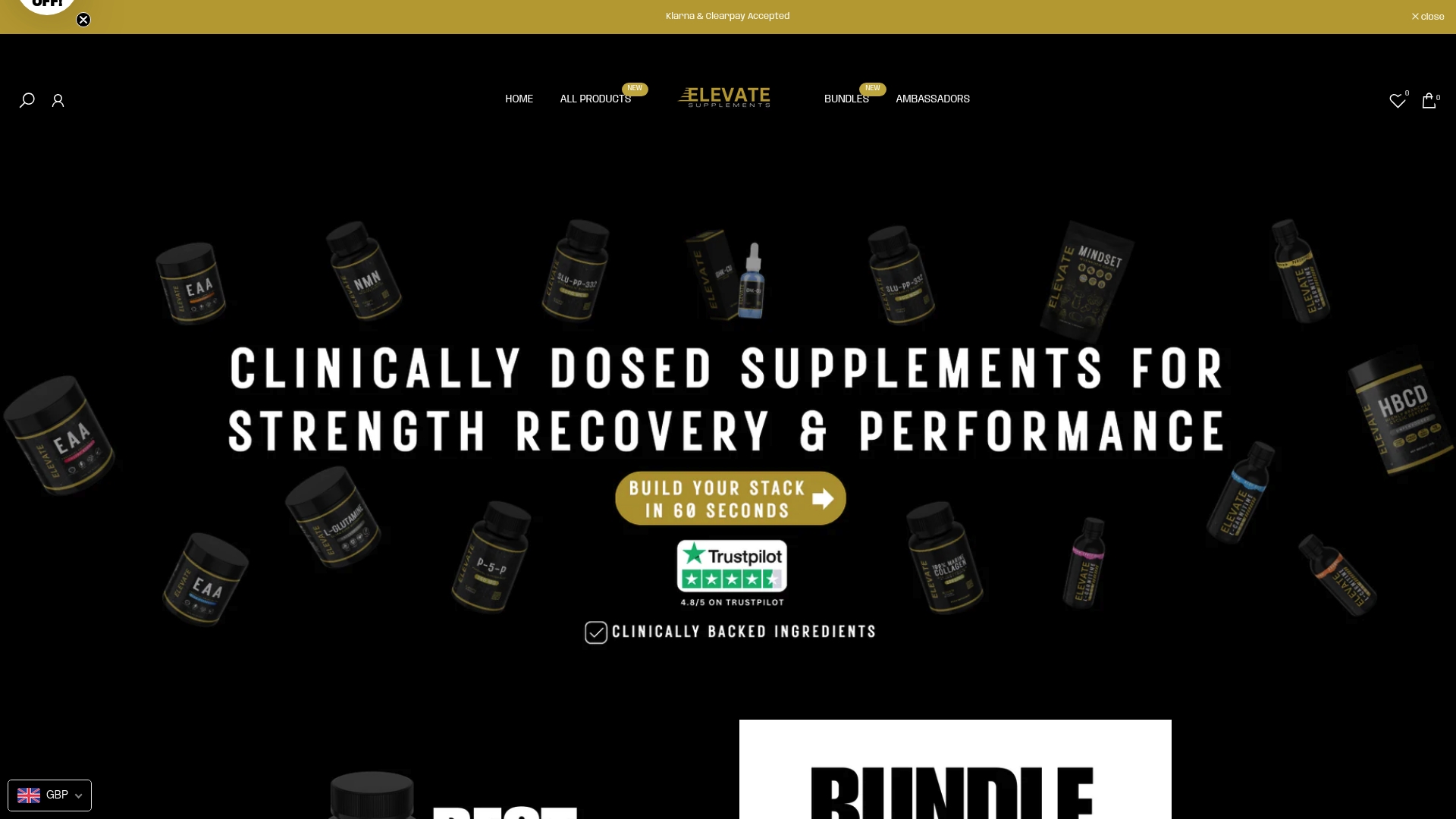
At Elevate Supplements, every product is selected with performance and quality in mind. Whether you are starting with creatine monohydrate as your foundation, adding whey protein for muscle repair, or including essential amino acids to support endurance and recovery, you will find batch-tested, athlete-grade options ready for fast delivery across the UK and Ireland. Build your stack with confidence, backed by products that match the standards this guide has outlined.
Frequently asked questions
What is the best supplement stack for muscle gain?
Creatine, whey, and beta-alanine form the most evidence-supported combination for building muscle and strength, with each supplement targeting a different aspect of the growth process.
Is supplement stacking safe for UK and Irish athletes?
Stacking is safe when you use Informed Sport certified products, follow recommended doses, and consult a registered sports nutritionist before making significant changes.
How long should you stick with a supplement stack?
Trial each stack for 4 to 6 weeks while tracking performance and side effects, then reassess and adapt based on measurable outcomes rather than how you feel on any given day.
Does supplement quality really matter?
Absolutely. Batch testing is essential because contamination with banned substances is a documented risk, even in products that appear reputable on the surface.
Should supplements ever replace a balanced diet?
No. Supplements reinforce a solid diet but cannot replicate the full nutritional profile of whole food foundations, which remain the most important factor in any performance nutrition plan.
Recommended
- Top supplement stacking tips for optimal performance – ElevateSupplements
- How to Stack Supplements Safely for Maximum Results – ElevateSupplements
- Build the perfect supplement stack step by step – ElevateSupplements
- Why stack supplements for peak performance and recovery – ElevateSupplements
- The Complete Guide to Synthetic Vitamins in Supplements & Pet Food – Mindful Botany Market


