


TL;DR:
- Genuine supplement checkout requires multiple security layers beyond HTTPS, including PCI DSS, 3DS2, and fraud detection.
- High-risk supplement merchants often use specialist payment gateways to ensure compliance and account stability.
- Shopping from compliant, transparent stores with visible security badges minimizes risks of fraud, data exposure, and shop discontinuation.
Most fitness enthusiasts assume that any checkout page with a padlock icon is safe enough. For general retail, that assumption is mostly fine. For supplements, it is dangerously incomplete. The supplement industry sits in a unique regulatory and financial grey zone, where high chargeback rates, recurring billing models, and strict health claim rules create risks that standard ecommerce simply does not face. Whether you are stocking up on protein powder or ordering a specialist recovery stack, understanding what a genuinely secure supplement checkout looks like could save you from fraud, data exposure, or buying from a store that disappears overnight.
Table of Contents
- What is secure supplement checkout?
- How secure supplement checkout works
- Best payment gateway options for UK & Ireland supplement shoppers
- Risks, regulations, and how to shop safely for supplements
- The reality of supplement checkout security: what most guides miss
- Shop with confidence: premium supplements, secure checkout
- Frequently asked questions
Key Takeaways
| Point | Details |
|---|---|
| Supplements are high-risk | Online supplement payments require extra security due to chargeback and regulatory risks. |
| Specialist gateways needed | Most mainstream processors do not support supplements, so shops use high-risk payment solutions. |
| Look for compliance features | Safe checkouts offer 3DS2, SCA, multiple payment options, and visible regulatory badges. |
| Read store policies | Buy only from stores with clear, compliant claims and transparent checkout information. |
| Shop securely for peace of mind | Following these tips lets you buy premium supplements online with confidence and safety. |
What is secure supplement checkout?
A secure supplement checkout is not simply a checkout page that uses HTTPS. Secure supplement checkout refers to a payment process specifically tailored for supplement merchants, who are frequently classified as high-risk due to elevated chargeback rates, regulatory scrutiny on product claims, and the prevalence of subscription billing models. That high-risk classification changes everything about how payments must be handled.
Standard ecommerce, think clothing or books, operates with relatively low dispute rates and minimal regulatory oversight on product descriptions. Supplement stores face a completely different landscape. Health claims on labels attract attention from bodies like the MHRA and ASA in the UK. Auto-renewing subscriptions generate more consumer disputes. And the sheer volume of products with borderline efficacy claims pushes chargeback rates well above industry averages.
The supplement shopping convenience that online buyers expect must be matched by robust backend protections. The core technical elements that make a supplement checkout genuinely secure include:
- SSL/HTTPS encryption to protect data in transit
- PCI DSS compliance to secure card data storage and processing
- 3D Secure 2 (3DS2) authentication to verify buyer identity
- Tokenisation to replace card numbers with non-sensitive tokens
- Hosted checkout pages that shift data liability away from the merchant
- Real-time fraud detection to flag suspicious transactions
As InovioPay notes on nutraceutical processing, the mechanics of a compliant supplement checkout combine SSL/HTTPS encryption, PCI DSS compliance, 3D Secure authentication, fraud detection, tokenisation, and hosted checkout pages working together. Remove any one of these layers and the whole system becomes vulnerable.
A checkout page that ticks only one or two of these boxes is not a secure supplement checkout. It is a liability waiting to happen, for both the shopper and the store.
Browsing supplement powders or any other category on a reputable site should feel seamless, but the security architecture running underneath should be anything but simple.
How secure supplement checkout works
Understanding the essentials is one thing. Seeing how they fit together in a real transaction is where it becomes genuinely useful. Here is how a secure supplement checkout unfolds when you place an order.
- You add a product to your basket. The site’s SSL certificate encrypts your session immediately, meaning all data exchanged between your browser and the server is unreadable to third parties.
- You enter payment details. If the store uses a hosted checkout page, your card data goes directly to the payment processor, never touching the merchant’s own servers. This is critical for PCI DSS compliance.
- Tokenisation occurs. Your card number is replaced with a unique token. If the merchant’s database is ever breached, attackers find only useless tokens, not live card data.
- 3D Secure 2 (SCA) triggers. Under UK and Irish Strong Customer Authentication rules, your bank may ask you to verify the purchase via your banking app or a one-time code. This step alone reduces fraud and increases conversion rates when implemented correctly.
- Fraud detection runs in the background. The gateway analyses dozens of signals, device fingerprint, location, purchase history, to score the transaction’s risk in milliseconds.
- Approval or decline is returned. The whole process takes seconds from your perspective, but several layers of protection have just run simultaneously.
Pro Tip: Always look for a hosted checkout page rather than an inline form on the supplement store’s own site. Hosted pages mean your card data never touches the retailer’s servers, which significantly reduces your exposure if the merchant ever suffers a data breach.
For a practical example, imagine buying a fast supplement checkout experience for your next protein order. A compliant gateway handles authentication, tokenisation, and fraud checks without adding friction. That is the standard worth expecting.

Best payment gateway options for UK & Ireland supplement shoppers
Having explored how the process works, it is time to examine the trusted payment gateway options available in the UK and Ireland. Not all gateways are created equal, and for supplements, the difference between a specialist and a mainstream provider can mean the difference between a smooth transaction and a frozen account.
Specialist high-risk gateways like We Tranxact and PayBito are built specifically for supplement sellers, while mainstream options like PayPal and Stripe frequently terminate merchant accounts in this category without warning. That is not a minor inconvenience. It means a store you trust today could be unable to process payments tomorrow.
| Gateway | 3DS2/SCA support | Supplement-friendly | Recurring billing | Chargeback protection |
|---|---|---|---|---|
| We Tranxact | Yes | Yes (specialist) | Yes | Yes |
| PayBito | Yes | Yes (specialist) | Yes | Crypto option |
| Mollie | Yes | Partial | Yes | Standard |
| Shopify Payments | Yes | Limited | Yes | Standard |
| PayPal | Yes | No (high termination risk) | Limited | Standard |
When assessing the convenience and quality benefits of a supplement store, the payment gateway powering its checkout is a strong indicator of how seriously the business takes compliance. Look for these confidence signals as a shopper:
- Visible 3DS2 or SCA badge during checkout
- Multiple card and alternative payment options (Klarna, bank transfer)
- Clear refund and dispute policies on the checkout page
- FCA-registered or PCI DSS-compliant provider logos
- No pressure to use obscure or unverified payment methods
Mainstream platforms are attractive for their brand recognition, but their risk appetite for supplement merchants is low. A store using a specialist gateway is demonstrating a long-term commitment to staying operational and compliant.
Risks, regulations, and how to shop safely for supplements
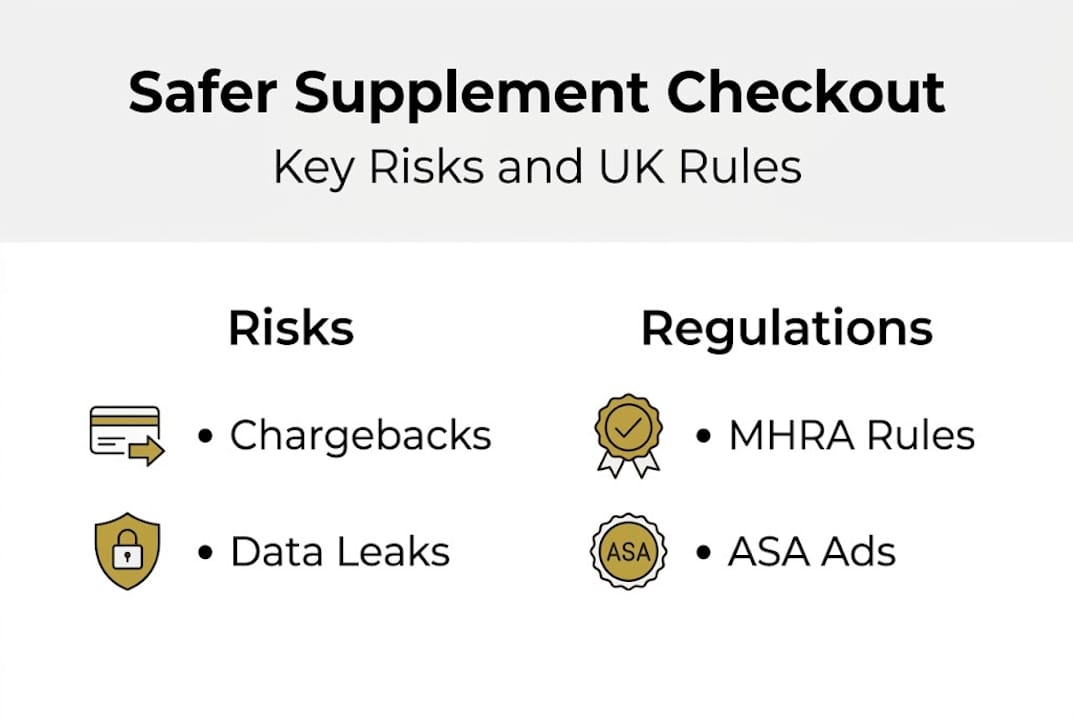
Understanding payment options leads directly to the dangers and safety steps unique to this sector. The supplement industry has some of the highest chargeback rates in ecommerce, driven by auto-ship subscription confusion, disputed health claims, and consumers who do not recognise charges on their statements.
| Merchant type | Average chargeback rate | Notes |
|---|---|---|
| General ecommerce | 0.5% to 0.9% | Industry standard threshold |
| Supplement stores | 1.5% to 2.5% | Elevated due to subscriptions and claims |
| Crypto supplement payments | Near 0% | No chargeback mechanism exists |
Crypto can reduce chargeback rates to zero for supplement merchants, which is why some specialist stores now offer it as an option. It removes the dispute mechanism entirely, though it also removes buyer protections, so approach it with care.
In the UK and Ireland, MHRA and ASA compliance is the regulatory backbone that responsible supplement stores must follow. The MHRA governs medicinal claims on products, while the ASA monitors advertising standards. Stores making unsubstantiated claims are not just at risk of regulatory action. They are also more likely to face chargebacks from disappointed customers.
Pro Tip: Before purchasing from any supplement store, check whether product descriptions stick to factual, evidence-based language. Phrases like “cures” or “treats” on a supplement page are a red flag for MHRA non-compliance, and that non-compliance often signals a broader disregard for proper business practice.
Red flags to watch for at checkout:
- No visible SSL certificate or HTTPS in the browser bar
- Only one obscure payment method accepted
- No clear returns or refund policy
- Subscription terms buried in small print
- No recognisable payment provider logos
For broader context on staying protected, supplement safety guidance covers what to look for when evaluating both products and the stores that sell them.
The reality of supplement checkout security: what most guides miss
Most articles on this topic stop at listing technical features. SSL, PCI DSS, 3DS2. Tick those boxes and you are safe. That is a comfortable story, but it misses the most important variable: the merchant behind the checkout.
We have seen technically compliant stores disappear overnight because their payment processor terminated their account. The checkout was secure. The business was not stable. Shoppers were left chasing refunds through their banks rather than through the store. That is the gap most guides do not address.
The uncomfortable truth is that an SSL badge tells you the connection is encrypted. It tells you nothing about whether the merchant has a sustainable payment relationship, whether their claims comply with MHRA rules, or whether their subscription terms are fair. A genuinely secure supplement store is transparent about who processes their payments, openly displays compliance credentials, and offers multiple payment options including 3DS2-authenticated methods and buy-now-pay-later options like Klarna.
SSL alone is not enough. Ask yourself: who actually processes this payment, and what happens if this store’s account gets terminated next week?
When evaluating where to buy, exploring supplement alternatives from established, compliance-focused stores is always worth your time. The technical layers matter. The merchant’s commitment to staying compliant and operational matters more.
Shop with confidence: premium supplements, secure checkout
With a clear understanding of what secure supplement checkout should look like, here is how Elevate Supplements provides peace of mind for your next order.
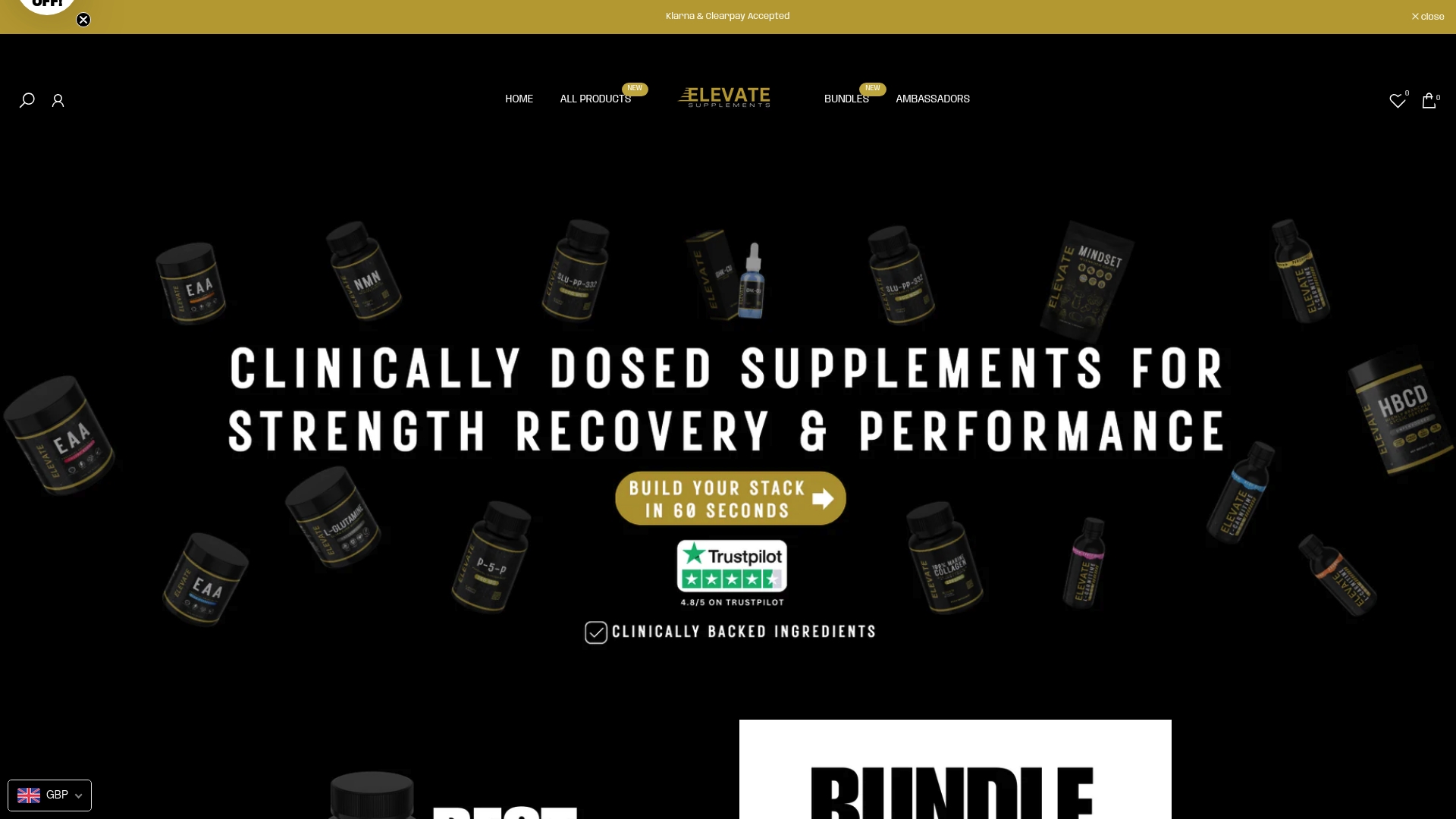
Elevate Supplements operates with specialist, secure payment gateways fully aligned with UK and Irish regulatory standards, so every transaction is protected from the moment you add a product to your basket. Whether you are exploring shop peptides or picking up an essential vitamins bundle, you can check out knowing that 3DS2 authentication, fraud detection, and compliant billing practices are running in the background. With BNPL, card, and multiple payment options available, shopping for premium supplements has never been more straightforward or secure.
Frequently asked questions
Why are supplement stores considered high-risk for online checkout?
Supplement sites face more chargebacks and stricter scrutiny on health claims and subscriptions, making them high-risk by classification. This affects which payment gateways will work with them and what security layers they must maintain.
How can UK/Ireland shoppers verify a supplement site is using a secure checkout?
Look for 3D Secure/SCA prompts, multiple payment methods, and compliance badges on the checkout page. 3DS2 and multi-payment support are critical indicators of a compliant UK/Ireland operation.
What are the biggest risks when buying supplements online?
The main risks are order disputes, data exposure, and buying from shops that may be shut down for non-compliance due to recurring billing issues or regulatory breaches.
Do mainstream payment processors support supplement purchases?
Many do not reliably. Mainstream gateways frequently terminate supplement merchant accounts, which is why specialist high-risk providers are the preferred choice for stable supplement stores.
Does using cryptocurrency help reduce supplement payment risks?
Crypto can eliminate chargebacks entirely, but it removes buyer protections too. Crypto reduces chargeback rates to zero for merchants, so always check a store’s full payment policy before choosing this option.
Recommended
- Supplement safety tips 2026: expert advice for UK users – ElevateSupplements
- Immune boosting supplements checklist for UK wellness – ElevateSupplements
- Why choose online supplement shopping: convenience and quality – ElevateSupplements
- What is fast supplement delivery and why it matters in 2026 – ElevateSupplements
- Payment & Security – New Way Ref


